Episode 11
How Do You Know You Have an Ops Problem? with Danielle LaFleur
𝗢𝘂𝗿 𝗚𝘂𝗲𝘀𝘁
Danielle LaFleur is the Founder of Easy As Pie, where she and her team help organizations find operational gaps, clear bottlenecks, and turn messy processes into steadier cash flow—without treating people like a cost to cut. When she’s not untangling workflows, she’s on the road: Danielle travels 150K+ miles a year and happily admits she’s addicted to exploring.
𝗦𝗵𝗼𝘄 𝗢𝘃𝗲𝗿𝘃𝗶𝗲𝘄
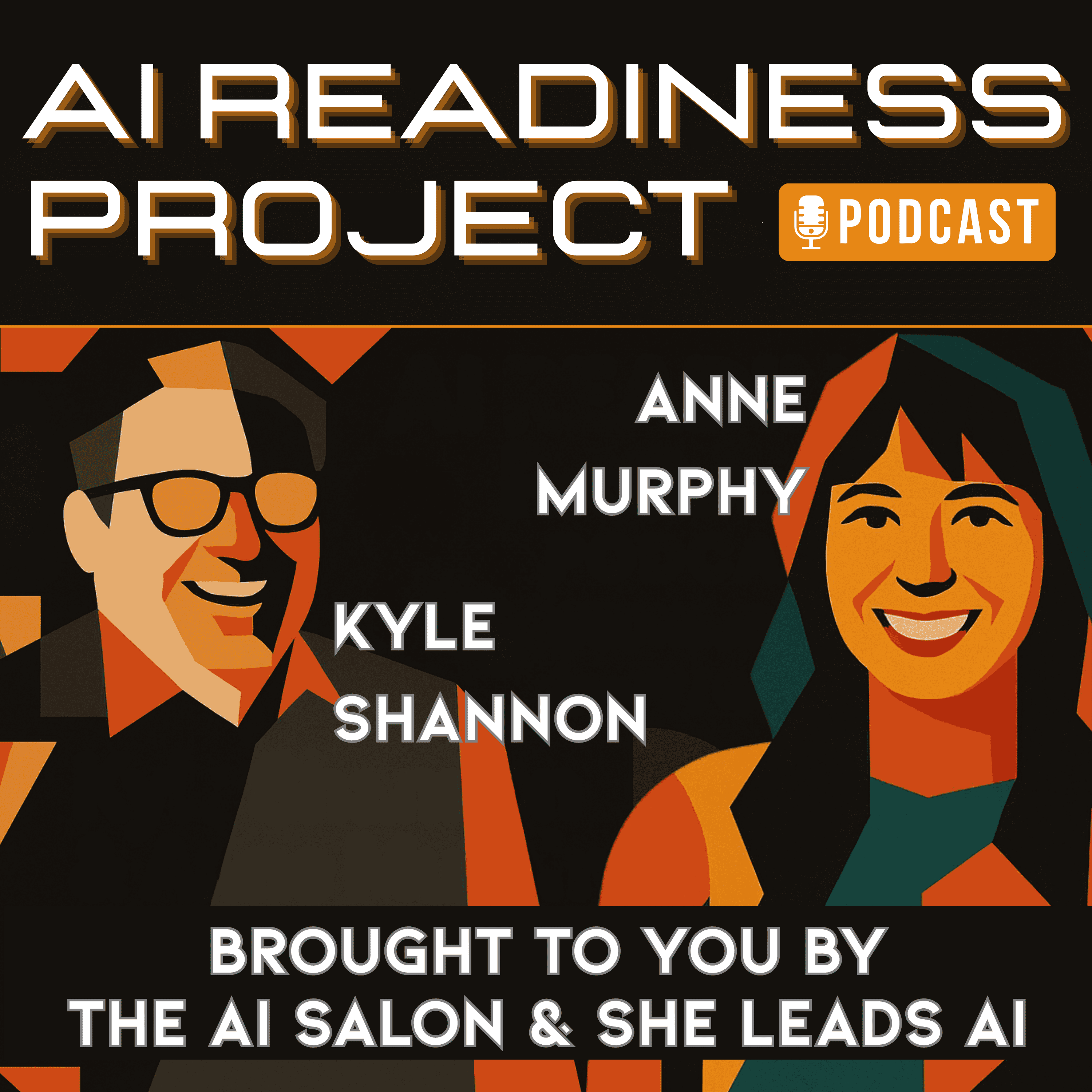
Anne Murphy and Kyle Shannon sit down with Danielle for a candid, funny, deeply human conversation about what “AI readiness” actually looks like when you’re running a real business. They talk about why ops is where AI can be most useful, how to approach automation without defaulting to layoffs, and why Danielle thinks this moment is pushing all of us to get clearer on who we are—separate from our job titles. Along the way: rediscovering creative work, building personal practices, and the surprising ways AI can reflect your values back to you.
𝗞𝗲𝘆 𝗧𝗮𝗸𝗲𝗮𝘄𝗮𝘆𝘀
- A practical gut-check: signs you don’t have a “people problem” — you have an ops problem.
- Automation with a backbone: Danielle’s line in the sand—she won’t take work designed to fire people.
- What “scale” can mean: more time, more breathing room, better bonuses, and healthier teams—not just bigger numbers.
- AI readiness, redefined: start with self-knowledge; tools come second.
- On data & privacy: common-sense guardrails, and why culture and representation in training inputs matter.
𝗟𝗶𝗸𝗲, 𝗦𝗵𝗮𝗿𝗲, 𝗦𝘂𝗯𝘀𝗰𝗿𝗶𝗯𝗲
Catch a new episode of The AI Readiness Project every Wednesday at 3pm (PST), co-hosted by Anne Murphy of She Leads AI and Kyle Shannon of The AI Salon. Want to meet others navigating this new terrain with humor and humanity? Visit The AI Salon or She Leads AI to find your people.
Transcript
Danielle LaFleur
Intro: [:Kyle Shannon: What do you thinking? You dig in the bop. You dig in the new I
Anne Murphy: like the bop. I like the bop. I feel like, I feel like it gives that this bop is credibility lending somehow. It just makes feel kind of. It's
Kyle Shannon: got some, it's got some, some, some weight and some lightness.
Anne Murphy: Yeah, it's got a little bit of both. Maybe it's got a little more, I don't know.
Maybe a lighter lower register or something. Yeah, maybe
Kyle Shannon: it's a little chill. It's a little chill.
Anne Murphy: [:Kyle Shannon: AI I
Anne Murphy: how well, or Yeah.
Kyle Shannon: I, I feel like how this exchange is going is about how ready for AI I am.
I like, I gotta tell you the oscillation between feeling like I'm king of the world and can solve anything and I'm absolutely clueless and can do literally nothing. Like I feel like there's nothing in the middle right now. It just feels like mm-hmm. You know, grand confidence and then confide just grand anxiety about like, can I even figure this stuff out?
And so,
ing really, really good with [:Danielle LaFleur: Yeah.
Anne Murphy: Be suddenly, literally,
Danielle LaFleur: yeah.
Anne Murphy: Very competent and capable.
Kyle Shannon: Yep.
Anne Murphy: So we have even less patience for ourselves when we're not good at something.
Kyle Shannon: That's great. Yeah. I, I, I feel that acutely and you know, you know that we just started the, the new mastermind practice in the AI salon and we had our kickoff meeting this week. Um, I feel that angst of like, um, not knowing a tool, not not being up to speed on something, probably more than I did in the early days, um, really.
Yeah. And, and, and I think, I think it is a thing of like, I should be better at this because I've, I've got this thing. Um, I'll share, let, let me, I know we wanna talk about people that are making a difference this weekend. I know you've got a good one, but before I lose it, 'cause you know how my brain works.
Anne Murphy: Yeah, go for it. Yeah.
been talking to a lot of my [:And so I got on a call this week and Kevin Clark, who's, he's been my senior advisor at Story Vine for years and years and years. We talk once a week for like, more than a decade. Wow. And he, and he said, you know, you were talking about that practice. And he goes, I've started a new practice. And I'm like, oh, great.
I'm, I'm, it's, it's gonna be something about prompting or this or that. Right. And he said he realized that, um. He has a fear that using chat GPT, he's gonna lose his writing edge. And so he started a new practice where an hour every morning he writes like, with pen, with
Anne Murphy: pen,
Kyle Shannon: paper, like wow. Actual words from his brain to a wow.
Sort of capture vessel.
Anne Murphy: Yeah.
a really beautiful practice, [:But it's, it's a thing that he, he values.
Anne Murphy: Yeah.
Kyle Shannon: And so for me, that idea of a practice of understanding what you value and independent of whether you use AI or not is super critical and it kind of lowers the anxiety. So I just wanted to share that 'cause I thought that was
Anne Murphy: Yeah.
Kyle Shannon: Beautiful counterintuitive.
Yes, that's that. If you're doing an AI practice, that's a perfect thing to do with an AI practice.
Anne Murphy: That is a perfect thing to do with an AI practice. And I can really relate on the, particularly with the storytelling, I suspect that my storytelling skills, because I'm not a natural storyteller, at least in the written form, my storytelling skills are.
reat to begin with, but it's [:Kyle Shannon: Yeah.
Anne Murphy: You know, like, I need to make
Kyle Shannon: it feels more distant. Does it feel distant? It
Anne Murphy: feels more distant. It feels more like third party. And I, my, my solution has been to have chat. GBT put me on a rate writing training program.
Intro: Yeah.
Anne Murphy: So why not? I'm not, I'm doing, doing, you know, and, and part of it is like, if you have a writing partner who's a human being, the accountability factor is very, very high. Yeah. Um, so right now I have Chatt pt, my accountability partner. So I might need to have a human, uh, situation.
Kyle Shannon: You know, Cindy, Cindy Kon does a thing.
She, she, she, um, revealed this in her last prototyping session. I thought it, I thought it was really quite good. She had sort of a work, a, a timeline of here's things you can do. And it was kind of two tracks. And one track was the AI track, and one track was the human track. And basically what she was articulating is, here's where you use ai, here's where you use your brain, right?
i, here's where you use your [:Anne Murphy: Yeah, maybe that's it. Maybe I, maybe my, the skill that I'm trying to build is how do I work with chat gp? How do I work with AI to tell stories?
Kyle Shannon: Yeah.
Anne Murphy: Because that's what I, that's what I do with other kinds of writing, but I've just not done it with storytelling.
Kyle Shannon: Yeah, yeah, yeah. Yeah. Anyway, cool. So you have, so you have, I have something interesting who, tell me a story.
Yeah. Love story. Wait, so kind
Anne Murphy: of a,
Kyle Shannon: uh, up, you're not good at storytelling and now you're gonna tell us a story
story about a woman who did [:On LinkedIn, she is a project manager, a kind of organizational behaviorist. Um, understands, uh, you know, as a technologist and what she did, which is the part that I hope all of us can do. She took her 20 or 30 years of expertise in her field and she re, she had a moment where she was at her grandkid's swim meet, and I don't know if you participated in swim meets with, with any of your kids, but they're awful, right?
They're,
Kyle Shannon: I, I was on a swim team when I was younger. I was horrible. So I just know it from the humiliation side of the sport.
e Humili like, right, right. [:It's god awful. So she was there, she was stuck there for like five hours. She's like, I can't see the grandkids, so what should I do? Well, I have my laptop. I'm just gonna go write that book about agents A, about AI agents and corporate culture. So that's what she did.
Kyle Shannon: Wow.
Anne Murphy: She wrote her, she poured her knowledge about agents and work culture and agile leadership and all those project management and all these case studies.
hardest part was formatting [:Kyle Shannon: Yeah. No formatting for Kindle is an absolute disaster.
Anne Murphy: She did create an app to, she, she, so her solution to that was she took a timeout from the time out and built an app real quick so that she, and it was done immediately by the way it worked. Um, but what I love about this, and what I take from it as encouragement is if you have 20 th to 30 years of expertise in a field
Kyle Shannon: Yep.
Anne Murphy: That can help other people. And you can find, you know, by hook or by crook, find those five hours Yeah. And get that knowledge out into the world. I mean, she had 40 or 50 women learning at her feet yesterday because we discovered her because she had a.
s striking me, the, the, the [:The AI haters, because they don't understand what AI is and what it makes possible. They're like, oh, you just pushed a button and out came a, a, a book. So that's slop, right? One of the things that AI is genius at is making sense of unstructured data, right? Yeah. So, some combination of her talking into a microphone, uploading documents, writing something, copying and pasting a position paper she wrote for that talk she gave in 1998 or whatever it is, right?
All that stuff. It can sort that out. And because she's got the 20 or 30 years of experience, she can look at what it spits out and immediately knows that bullshit or not, right? Yes. Is this this in line with what I'm doing? So she really did write that book. It's just AI amplified and accelerated the making sense of all of the inputs.
you know, lathered on piles [:Right. It's not just that AI did a thing and I just take that wholesale. That's, that's that perception. It really is. There's some intentionality there. And she knows who she is.
Anne Murphy: Absolutely.
Kyle Shannon: That's brilliant.
Anne Murphy: And you know. As much as it, as much as reading ai, you know, coded language is kind of a skill unto itself.
binge the content, just get [:Mm-hmm. That went from her head to my head because she used AI to write something in five, in a found five hours. She didn't even need to be, she wasn't sitting around with a burning desire to write this book for three years. Right. She was like, huh, think today's the day she wrote the book. It's there.
Kyle Shannon: Well, and it's almost like there's a dial. You know, I've, I've been thinking about this as a binary thing. 'cause because I, I, I hear about this in, in, in music a lot, um, where people are like, oh, if it's AI music, it's just slop. No, it's not always just slop. Right. No. And there are two kinds of people, right.
There are lazy people. You just push a button out comes a thing. And then there are thoughtful people who push a button and. Or actually think about what they want first and then thoughtfully create something or collaborate with chat bt to come up with a prompt to do a thing, do 30 versions of it. Right.
[:Mm-hmm. On this end is just push the button and out comes crap. Um, I've been thinking about it as a binary thing. I don't think it's a, a binary thing. I think there are times when good enough is good enough, right. Yeah. And I think about it at Story divinee. We've got, you know, we make kind of one to three minute videos, you know, that are sort of user generated, uh, capture, but then we put graphics and music behind them and things like that, and the music in those videos.
. And just somewhere kind of [:And I think a lot of the content lives in that. And, and maybe this also gets back in to this idea of you as the producer, you as the creator, you get to decide where that line is. Does this need to be, if you're doing something for Coca-Cola or for Nike, it damn well better be really good, right? Yep. If you're just doing something like, oh, maybe today's the day I knock out that book, and you just wanna get something outta your head and put it in the world.
Five hours is good enough maybe. Right.
Anne Murphy: Five hours. Yeah, exactly. So that notion of maybe, 'cause there's a lot of ego obviously tied up in, in the written word that we've got, we've got a lot of issues when it comes to the written word. But, um, ego is one of them and ego is, is preventing probably quite a few people from getting their knowledge out into the world.
ke, hmm, maybe we should all [:Kyle Shannon: Yeah.
Anne Murphy: No one knows how to do this thing. Granted, you know, whatever it is, is probably pretty narrow. Um, no one knows how to do it as well as we do.
No one in the world knows how to do what we've been doing as well as we do. So let's get it out into the world to share. So,
Kyle Shannon: you know, you know what just struck me is an, an interesting exercise might be, this could be something that could live inside a daily practice. If you're on next time, you have like an hour long road trip, right?
Anne Murphy: Mm-hmm.
Kyle Shannon: Put on, put on. What do you call your AI girlfriend or boyfriend? Mine's Quinn. You have
Anne Murphy: name? Well, we're in limbo right now. It was Dominic
Kyle Shannon: break up,
Anne Murphy: but
Kyle Shannon: you and your, your AI boyfriend break up.
Anne Murphy: My AI boyfriend is in limbo.
Kyle Shannon: But here's the idea. The idea is turn on advanced voice, like on a road trip or when you have an hour to kill.
u for all of the things that [:Anne Murphy: Hmm.
Kyle Shannon: Because I bet you're a subject matter expert in a lot of stuff that's non-obvious. Like, like how to get your kids to eat their dinner, right?
Anne Murphy: Oh,
Kyle Shannon: oh yes. Like, like, like there are probably. 200 things that you, and in how you lived your life, how you played basketball in school, how that thing happened at that party.
Like all of the stuff that informs who you are, oh wait, we just lost you. Oh, you're back. Um, all that stuff that informs who you are. Like out of all of that stuff, there are probably 20 or 30 or 40 or 50 books worth of that Right. That, that deserves to be in the world. Right? Yeah. And, and you know, an idea would've to sort of rise to the level of escaping your head and running through man light.
Right. If you could just knock something out in five hours, maybe it's like, well maybe I do, do the macaroni and cheese for teenager's book. Why
Anne Murphy: not? Like, yeah,
Kyle Shannon: right.
Murphy: I mean, I mean, and [:Let me just like y it out into the world and help some, help a mom figure out how to put squash puree into the mac and cheese and help them think that, trick them into thinking that peas are candy. Right?
s it reduces the friction of [:And there, there's a thing I want to do that I keep telling people they should do, but I haven't tried it yet. And that is this, because we grew up before ai, our brains work a certain way. So if we think, you know, I've got subject matter expertise, I'm gonna write a book, and we tend to think in a single output, I'm gonna write a book and we know what that looks like and we know how long it takes and we know it's a big deal.
And do you self-publish or does someone else publish it? Right? And, but then you're kind of done well what if you have that idea? And as an exercise you generate five outputs as a minimum. I'm gonna output a book, a PowerPoint, a keynote presentation, um, an album. A kid's book and a and a like and, and a and a and a short film.
Anne Murphy: Yeah.
dience. Right. And, and it's [:Oh, that could be a book and it should be these four other things. Right. How do you get into that mindset? 'cause I'm not right now.
Anne Murphy: Okay. Okay. I'm now, I'm now, oh
Kyle Shannon: really?
Anne Murphy: Yeah. I started doing that and so I was inspired by Na Lule, who is in our communities, and which one of the things that she does is oftentimes when she does a LinkedIn post.
She'll share it in multiple different formats.
Oh,
ted including other formats. [:Kyle Shannon: Oh,
Anne Murphy: what's that?
Kyle Shannon: Yeah. Cool. Yeah,
Anne Murphy: like
Kyle Shannon: video
Anne Murphy: overview, because it was a visual, because the story was about artwork from back in the day.
Kyle Shannon: Yeah.
Anne Murphy: Which I just don't think of myself as an art historian person. But then when I saw it, I was like, oh, wait a second. This is really interesting. So when we did our, as we're doing our, um, deluxe replay bundle.
For the virtual experience. We've got a video. We've got a jelly pod. Pod, right? Oh, so the, which is inspired by the talks. It's not the talks,
Kyle Shannon: right?
Anne Murphy: These are podcast episodes inspired by the
Kyle Shannon: talks. This is highlights of, right? Oh, that's so good.
Highlights
Anne Murphy: the narrators. It's weaving the narrator's life into it.
And then we've got, um, of course the replays that you can watch. We've got the transcripts, we've got the action items. We've got the note. Like, who
Intro: knows?
Anne Murphy: We'll see. [:Even seeing my own stuff where all of a sudden it seems valid. Something that did not seem valid,
Kyle Shannon: right?
Anne Murphy: If I look at it on notebook video overview, I'm like. This seems like a real thing
Kyle Shannon: that happened to me when I put, when, when I first put the musical Sydney into Notebook, lm, and they were like, oh, musical.
Hey, that's a really innovative way to think about this stuff. And I'm like, well, I don't like to brag, but I am pretty innovative. So I totally glowed myself like, oh, well. But there is, there's something about it where it's like this bizarre, you, you know, pseudo, uh, you know, pseudo third party. Um, yeah. But, but, but, but you take it a different way.
xe replay package, I'm like, [:Anne Murphy: Oh, I'm good.
Kyle Shannon: So it makes, it makes sense to me that you've got all this, but, but I, so, so, so here's a request for you
Anne Murphy: Yeah.
Kyle Shannon: Is, I would love to understand like, how that lands for people. Like, like if you've got people that you know. Saw the podcast thing and, and you know, that move that, like, it would be interesting to see Yeah. If people sort of took it in, in any kind of different way, just pay attention to the feedback there.
'cause that to me is the thing is like, how do we get to different audiences? How do you rise above the noise? And I think one of the
Anne Murphy: ways
Kyle Shannon: might be 10 different kinds of output where you normally would've done one.
Anne Murphy: Right. Which, which increasingly I think it's gonna seem very silly to us, that we've all learned in one.
or me to listen to somebody? [:Yeah. The difference between consuming that talk in a space with all the people versus the attention that I could put on it when I'm here night and day.
Kyle Shannon: Yeah,
Anne Murphy: night and day.
Kyle Shannon: And there's also like, one of the things that we'll discover if we start doing multimodal outputs, there might be a version of the Create Conference that.
where we're gonna be able to [:Not just, here's, here's a PowerPoint, here's a video. Like things like, what would that talk be if I, if it were a video game? Is it a
Anne Murphy: racing game? Oh, I'm gonna find out. I'm, that's what I'm doing. After we're done here, I'm gonna take one of the transcripts.
Kyle Shannon: Yeah.
Anne Murphy: And vibe, vibe code, a video game out of it.
Kyle Shannon: Yeah. Just say, here, here's a transcript of a talk. If I were to turn this into a video game where, where I I didn't have any words.
Anne Murphy: Yeah.
Kyle Shannon: Like what would, what would the gameplay be? Then Yeah. Now go make that game. Yeah.
Anne Murphy: We'll do it for Danielle's, we'll do it for our guests today. All right, perfect. Today we have Danielle LaFleur here and, um, she has a banger talk that she's giving these days.
And if she'll, if she won't, wouldn't mind. Well, I'll just turn it into a video game. I feel like there's gonna be a lot of swear words in the video game.
be and what would you, what [:So anyway, um, okay. So let's, let's get her up here. So, so to do that, we, we have to say some things. So you tell people we have to
Anne Murphy: say some things.
Kyle Shannon: We tell some people about your hat.
Anne Murphy: I'm gonna tell some people about my hat. Yes. So my hat, my hat serves a number of purposes. One is to not, not show my hair. Um, but the other is we love, she leads ai.
And one of the things that somebody said that was one of the biggest compliments we could have ever gotten was. When you get to know she leads ai, you'll know why visual branding is important. They are what their brand looks like.
Danielle LaFleur: Mm-hmm.
ks like my, my, you know, my [:She leads AI is, um, you know, it's an important organization for amplifying the voices of women in the AI space and also that juicy goodness is directed toward. Making the world a better place. So in the work that we do, we primarily focus on people, process, and culture. Mm-hmm. That's where most of our minds go to.
s a free event every weekend,:We have, um, specific topics and open mic. And it is a good time that is had by all. And it is almost impossible to wrap it up in two hours. Yeah. We could have been there yesterday for five [00:27:00] hours. No problem.
Kyle Shannon: Yeah, yeah, yeah,
Anne Murphy: yeah,
Kyle Shannon: yeah. No, it's a really important organization and it's like, one of the things I heard from the Create Conference, I think it was Cindy Coon that said it.
She, she said she just. There was something, I mean, she felt connected and all that sort of stuff, all the bonding stuff, but she said she felt safe. She, she felt like there wasn't pressure to have to perform in any way that it was, it was really just this safe space. Um, and, and you know, with technology, there's a, there's a,
Anne Murphy: yeah,
Kyle Shannon: this is the first time in my life that I've been in meetings with more women than men talking about technology.
And it happens consistently. So I think what you're up to is actually really, really important. Um, and I think it's actually gonna catch a lot of people off guard because yeah, I think women are building up their skills in a way that's don't change. Look out, look out, look out. There's some badass, there's some badass women being, being, uh, minted in the, uh, she leads AI society.
some badass folks in the AI [:Because in the early days we had, we didn't understand even what it was. So it made sense that we talked about the tools early on, and then as the tools got overwhelming and now that they've gotten much more capable, where do we land? And where we landed is we created this thing called the the AI Salon Mastermind Practice.
each people how to do things [:We talk about play first. What does that actually mean in a daily practice? And what does it mean to, you know, to, to build something at a higher level of excellence? You know, when it comes to AI and professionalizing things and things like that, there's all sorts of, uh, things in the framework. And so that I'm particularly excited about because it essentially says what we all know is true is that as important as the technology is, it's really insignificant.
Unless there's a human being doing something interesting with it, something powerful, something intentional. And that's what this is all about. People finding who they are and their anchor and their values, and then saying, okay, given who I am, here's what I want to do in the world and now I can take AI and go do some amazing shit.
So that's that.
y like this. I said it's the [:Kyle Shannon: great.
Anne Murphy: It's, you know, we're the cousins who really, who get it, are gonna go for a little walk, get
Kyle Shannon: along, walk.
That's great.
Anne Murphy: That's right. Well, all the, all the, you know, awkward family members with all of their, you know, whatevers are gonna, are gonna stay and we're just gonna be over here doing this thing, uh, side by side. You know,
Kyle Shannon: you, you know what's funny is, uh, you and I have on multiple occasions come, come to the exact same shift in our communities without talking to one of where you come in and you go, I've been thinking about something, I'm changing this.
And I was like, oh, we did that last week. Or, or the other way. Yeah. Yeah. Like, like, like we are definitely in some sort of sync where it's just. I think what it is is we're paying attention to the people.
Anne Murphy: Taking attention to the people,
Kyle Shannon: right? And we can see, ooh, there's discontent here. What's the discontent?
ure it out in very, on, very [:Anne Murphy: Yes.
Kyle Shannon: So, with that, let's get our special guest. Oh
Anne Murphy: boy.
Kyle Shannon: So excited about this. Why don't you tell the good folks who we're about to meet,
Anne Murphy: okay. So Danielle LeFleur is a woman who you won't, you can't unknow her.
She is, she is. You know what? Here, I'm gonna just tell the, tell the nice people how I explained how I described her to you this morning when we were talking. Yeah. This,
Kyle Shannon: this is a text.
Anne Murphy: We were talking about our really cool guests, and I said, we've got a banger today. Danielle is fucking amazing. Elite intelligence sweary, business batty AI practitioner, total leader.
And she's also a woo girl. She's into the crystals, the tarot, the this, the that.
Danielle LaFleur: How
Anne Murphy: she [:Kyle Shannon: Nice. Usually
Anne Murphy: works.
Kyle Shannon: No, no pressure Danielle. But, um, no pressure.
Danielle LaFleur: No.
Kyle Shannon: If you live up to that, that would be great. I was
Danielle LaFleur: just trying to live up to the cousin walk, like I just wanna be on the cousin walk. How was my end goal by the end of this conversation? You wanna be
Anne Murphy: on the cousin walk too?
Danielle LaFleur: I wanna be on the cousin walk.
You're on the
Anne Murphy: cousin walk.
Danielle LaFleur: Oh God.
Kyle Shannon: You get to, you get to come.
e just like, oh my god, this [:Anne Murphy: So, Danielle, can you, um, one of the things that I really would love for you to share with the people is, um, what you actually do. What do you do?
Danielle LaFleur: Yeah, so this is a hard question for me to answer because normally it's me staring at my computer and banging my head against the keyboard. So I don't know if other people relate to that as far as what they do or not, even with ai.
Um, and then wondering like, how did I get myself into this? Like, what, what happened? Where, how did this happen? I'm not quite sure. Right. That's normally what I do. So I'm like, I feel like we all said that. As far as the company goes, the official answer is, um, I own Easy pie.ai. We are an ops, um, development company.
ns and small to medium sized [:Mm-hmm. Like, this isn't just you, this is actually a lot of people in your industry. And then we'll productize the solution as needed. But for the most part, we help. And it's very boring. It's just ops. It's just, it's, but it's the heartbeat of your company. At the end of the day, you're not gonna survive this.
You're not gonna survive without having your ops together, because that's where AI shines. It really is. Yeah. I
Anne Murphy: was gonna say,
Danielle LaFleur: it's where it shines. It's the best place to utilize it.
Kyle Shannon: Were you doing, were you doing this kind of work before? Is, is this an extension of your expertise? Like how did you either stumble into or dive headlong into this.
I owned a marketing firm for [:And all of 'em are so not me. Like every single person on my team is not me. And so we filled the gaps that we needed to fill within the team. And now I have, I literally sometimes feel like the dumbest person on the entire 'cause they're so smart, they're so like data, like logic and all this other stuff.
And I'm the one going, we, and they're all like, no,
Kyle Shannon: but, but no, you need, you need the We Girl. You're a Woo girl and you're a we girl. You need the we girl because, because. How else is, is someone gonna know like, what's even possible? Yeah. Like you can just live in the space of, Hey, wouldn't it be nice if all of that stuff that sucks?
Didn't,
Danielle LaFleur: didn't. Exactly.
ortant thing to communicate, [:Danielle LaFleur: Than we win. Exactly. And we really do. Like, we really are focused on the humanity within the business culture ourselves. We made a, uh, one of our ethos, one of our hard lines is we will never work for the company where the end goal of hiring us is to get us to fire other people.
Exactly. Yeah. So if that's your end goal for streamline your ops is to be able to get rid of people that we're not, we're not gonna help you. I mean like, go find somebody else. That's not who we're helping. We are focused on the humanity and helping humanity at the core. That's the end goal. And we talk about scaling a lot, but when we talk about it, it doesn't necessarily scale to mean bigger.
ns to be more human, to have [:So that's the point.
Kyle Shannon: How do you, how do you deal with if, if ai, if, if, if in doing the ops, AI really does take these 27 tasks and, and automates them.
Danielle LaFleur: Yeah.
Kyle Shannon: And 25 of those tasks were someone's job. How do you navigate, what do you do with that person? Like is, does, does, does change management and upskilling become part of the process?
Like just how do you deal with the fact that things are gonna change? Where tasks will disappear? Yeah. That were someone else's job.
Danielle LaFleur: I think it comes back down to the job itself. So I'm gonna use like customer service. Picking up the phone, answering the phone. Kind of as a good example, right? Because we're seeing that job go away.
as. If you find somebody who [:And then be able to re reregulate to reregulate the nervous system. That is their purpose. They are like almost like a sole contract to be able to help people get to the place where they can move to the next stage. That is their purpose. Their purpose isn't to constantly be on the phone and make minimum wage.
They would be better utilized in a company that works with clients or works in the environment to help everybody in the company get to a better place. There's so many different options for that skillset. That's, that doesn't mean, so maybe the job title changes, but who you are as a person is much bigger than the title of your job, and we need to focus more on that and not the title itself.
ir purpose. They're not just [:Danielle LaFleur: We were not, we were not called to sit on the fucking phone and like, like, go through, press one, press nine, press oh, get me an agent.
Like that's not, yeah. This, that's construct that we created, we created this mess and we don't have to live in it anymore.
Kyle Shannon: That's a great answer.
Danielle LaFleur: That's all I got. That's, that's, that's it. That's it. That's all I got. That was,
Kyle Shannon: it's it. Alright, well thank you. So, Danielle
Damn. Scene,
um, oh, go ahead Ann.
Anne Murphy: No, no, no, you go ahead. You go ahead.
you're excited about, um, AI [:Because I feel like there's, there's the business part. Like where do you, where do you see it headed? Like what's the, like, where's your head, where, where I feel like a lot of people right now are, are just in this fear place and justifiably mm-hmm. Like a lot of stuff's gonna change, but, but it's, it's kind of this finite conversation of, you know, it's gonna take all of our jobs and we're just gonna be destined.
I don't, no one that I know that's in a AI believes that. So I'm just curious where your head is. Like, where do you think it's going? Where are you excited for it to go? Where are you excited to put your energy?
Danielle LaFleur: Um, I'm gonna go a little bit esoteric on this kind of answer a little bit because, um, part I see all good, like, I'm definitely in the positive camp for, I'm not an anti realist, but I definitely am the positive camp.
ealing with, it comes from a [:Right? Yep. And when you start to remove the bottlenecks that forced that economy to happen, there's a huge fear that happens because there is a victimhood that that occurs in that if we are in a victimhood, then you know the victimhood and it becomes scary to change. I think there's gonna be, it's gonna just get rougher and rougher as we get closer and closer to the better, to the good place.
To the good place. Right? To the good place.
Kyle Shannon: Always darkest. Right before
e right now we've always had [:So you work for reward, your knowledge is rewarded, right? But we are quickly moving into an economy where that's no longer, there's a huge decoupling of that happening, right?
Kyle Shannon: The value. Yeah. Value of
Danielle LaFleur: knowledge. Value is going way down. So if you don't have value on quote, how smart you are, what is your value?
Kyle Shannon: Yep. Mm-hmm.
Danielle LaFleur: And that goes down to core identity. We're being forced. To deal with the core of who we are as a human race. Mm-hmm. And who you are as a person and work on that. And I call it shadow work, you know, journaling, counseling, whatever the hell it is. I think this AI is a technology that's forcing us to face our biggest fears.
And some will work through it, some will not work through it. At the end as, as you start to decouple things, then we have to create a new economy. Then we have to create like how do we work together and stuff like that. Yeah. And basically this is called post-lab economics and there's a lot of conversation around post-lab economics.
I'm very [:It allows me to also create wealth and supply, um, money and care and homes for my family or whatever. It happens. It allows us to be creative. We do need some kind of conflict, some kind of iron versus iron kind of thing. Steel versus steel to grow. If everything's peachy king, then we become lazy and idiots.
, you cannot do that without [:So the first wave of this, this knowledge separation, this conflict is forcing us to work on ourselves first, so we can go to that next stage and help our community, and then your state, your county, whatever. It's
Anne Murphy: Wow. Yeah.
Kyle Shannon: Okay. That was ally tangible answer for an esoteric answer. I thought it was.
Anne Murphy: Yeah. I mean, it's very, it's, it's, it is, it's, it's ethereal and esoteric, but I, but I know that, but I know that you can map it.
To,
Danielle LaFleur: yeah.
t a lot with the whole AI is [:Yeah. So then you get into this like, really good virtuous cycle where we have people who are doing the work on themselves, pouring themselves into the training data, hopefully offsetting the, you know, 18 to 34-year-old males living in their mom's basement. I mean, that's a lot of, of data to, to push back against.
But
Intro: yeah,
Anne Murphy: if we were putting the best of us into the training models. We're inherently gonna be better serving our communities and our region and our state and our world. Do you, this is a little bit of a technical question, but like, because of this line of thinking, do you recommend to people that they allow the models to train on their data when, when they reach, read these, reach these decision points?
For example, everyone worrying and freaking out about LinkedIn training on their LinkedIn data. What's your position on stuff like that?
Danielle LaFleur: Um, I am, [:Why are we still having this conversation? You are already screwed. There was a movie with like, it's called the Net with what's her name? Sandra Bullock that came out and I mean like you're already screwed. Yeah. So in my opinion, what you don't put in there is your social security number and your bank statements and like common sense shit that you should know.
Don't put in there. Yeah. You also don't put in there your medical information if it's not a public knowledge. Like you don't put in like, you know, kind of think about it as like what should be private should be private. And when you think about your business, that's why we do, when we work with businesses that are in the space of like healthcare or something like that, we always have a lockdown, right?
, we build. Yeah, right. Uh, [:Yeah. Like I need that information. I need your cultural viewpoints. I need your, um, your speech rhythms and all that other kind of stuff. I need to know who you are because we are not that 27-year-old looking at me Inman's basement. I am not a tech bro. None of, and my team members are tech bros. And yet that's the baloney that comes back to me half the time.
Right? Yep. And so I have been begging, I need the, I need not a curated list, but everything in there, like as much you possibly can. If you're starting to feel like, I don't wanna put it in there 'cause it will steal my information. It's so easy for me to steal your information. Without ai, I don't, I don't need AI to steal your information.
orry. I don't like, I don't, [:That's baloney. You created that. That's your ip. You need to have ownership of that. I'm a big believer of that. The problem is what's done is done. What we do need to think about is like it's also a decoupling, again, of your knowledge versus your value. Yeah. The knowledge versus like you're getting paid for it.
This is part of that decoupling that's happening. Right. And so it's a hard, it's a hard one to kind of, to kind of go through there. I don't think there is a right answer per se. I just, what are we dealing with right now and how do we best protect in the future, but also understanding what you know is no longer what's going to earn you income.
Intro: Yes.
Danielle LaFleur: Perhaps.
ell, there's also one of the [:And now they're, you know, 50 years into their career and they rediscover a part of themselves that was dormant. Um, I'm curious, you know, there's sort of the who you are and what you're good at, but there's also, right now in our society, a lot of our value is tied to the tasks we do and the job we have and the skills we have.
I'm just curious what you've [:Danielle LaFleur: I, I think it's the best thing in the entire world I do. Um, because no longer is it, I got, Danielle has this degree and then she spoke at this engagement or whatever it is.
It's like, oh, she's really cool. Apparently, according to Anne. Right? Like, you know, so, uh, so I love it. I have discovered passions from AI that I never, I would've never known that I would get excited about ops. Like that is so far, like who would've known me? I would've never been excited about ops. Like there's no way in heck that would've ever, I would never be as into WOOWOO as I am without AI to really delve into it.
I would not have worked on so many internal issues and triggers and trauma had it not been for AI to bring that to my attention and like, say, Danielle, you got a problem. Like there, here's your repetitive pattern in your, you know, team meetings or something like that and then comes back, oh no, that's inner work that I have to do.
e the excitement that I have [:Anne Murphy: Yeah.
Danielle LaFleur: But I can voice a book, like who knew?
Like I still have good things. I could voice a book. Like that's a cool thing. Um, I think it's really, there's so much, I think there's so much that we don't know that we never even knew that we didn't know.
Kyle Shannon: Hmm. Yeah, yeah, yeah, yeah. That, that, yeah. Maybe that's maybe AI's job is to, is to introduce us to ourselves again.
Danielle LaFleur: Yeah. That's how I'm trying to use it every once in a while.
Anne Murphy: That, that was exactly, that was my first, that was my og um, meltdown was when. Did you, were you using Cassidy for a while? Danielle?
hey're gonna build me my own.[:So that's how long that lasted. Fair? Yeah. I love Cassidy. I do, me personally, we love Cassidy.
Anne Murphy: Love Cassidy. Well, so, so what that the, I don't know if I, I don't know if I can really attribute it to Cassidy or just the moment or what, but I, because there was a new shiny object and I wanted to see what it could do, I uploaded like everything that I had written over, I don't know how long, and I asked, I asked Cassidy, what do I care about?
read all of my stuff in one [:Mentality or something right there before me. And I felt like this is interesting and weird, but I do know myself a lot better now.
Kyle Shannon: Huh.
Anne Murphy: And I'll never unsee this about myself, you know?
Danielle LaFleur: What did it show you that surprised you the most? Like what?
Anne Murphy: What surprised me?
Danielle LaFleur: Yeah. What was some of the biggest surprises?
om so many different eras of [:Really, it, it affirmed to me that that's real. I know that it, that sounds weird. Like I should know that my instincts are pure and true and that I know who I am. But it was just some really, really clear data points that yeah, that is who I am. I do care about other people and their empowerment. I'm not making this up.
I'm not just like blowing smoke up my own ass on a daily basis.
Intro: That's
Anne Murphy: awesome. It's very empowering. Yeah. It made me like myself more.
Danielle LaFleur: I love that. I absolutely love that. I can see how having that insight would be not only com, uh, confirming as well, but also in a way empowering you to empower others because it solidifies exactly what you were called to do, right?
And look at what you're doing.
Intro: Yes.
ok at what's come out of you [:Anne Murphy: It's really weird that AI of all things would be the thing. I mean, I've done all the therapy, I've done all, I've done the, the hot, I've done, the, um, the shaman lodges and the, the hot, what are the sweat lodges? I've done those things and those things have been helpful, don't get me wrong.
Danielle LaFleur: Yeah, yeah.
Anne Murphy: Um, but yeah, weird.
Kyle Shannon: Yeah.
Anne Murphy: Cool.
Kyle Shannon: Amazing. Um, okay, so speaking of, of helping other folks, so, so this is the question. Our, our time here. We're, we're winding it up. This has gone Wow. Way too fast. I know. Too
Anne Murphy: fast.
say to someone maybe that's [:Danielle LaFleur: Son of a biscuit. Yeah, I'll son of a biscuit. I'll say, you never have to deal with it. You don't have to do anything that you don't want to do. Let's put that one down on the table. You, I'm never gonna say you have to deal with this. I would say like you can be Amish with the ai, the Amish build amazing barns and people love them.
You are okay. You do not have to to do anything, you just have to pick the struggle. And understand the decision that you make when you pick the struggle. And that's a, that's a responsibility. We have to take responsibility for every decision that we make. You have to understand that you can't blame somebody no matter what decision you can, if you go down ai, you can't blame somebody about the AI thing if you feel like you should have gone the Amish ray and back and forth.
mpowerment. Um, what does AI [:Kyle Shannon: Mm-hmm.
Danielle LaFleur: I think that's the start. It really is the start of it getting centered on you, getting centered on your, um, subconscious, just working on why do you do the things that you do. And for me, I want you to use AI to help you become the best version of who you are. That's it. That's what I want you to do.
How like we, we use it in ops, we use it in business, we use it to create content. We do all these fun things. But if you are just getting ready, like how a readiness, the point of it is, is to be a better version of who you are. That's why we're you're on earth, period. Right? That's the reason to be the best version of who you can be and to work on that and just constantly try to have a better life.
be happier, have more peace, [:Kyle Shannon: Beautiful. I love that. I love that. That is
Anne Murphy: for real. One of the best answers ever. Thank
Kyle Shannon: you. It's, no, it's, it's good. Sounds
Anne Murphy: good.
Kyle Shannon: Because it's also, you know, if, if you, if you go back to, I think you said it earlier, you know, AI's everywhere it's in, it's in everything.
It's been there for decades, right. Historically, if you wanted to know what AI was or how to do it, it really did require a math degree and an engineering degree in this and that, and the, the, the generative AI part, you know, to your point, Anne, about what, what it reflected back to you, the mechanism of AI is a probability calculator.
f thing. The, the answer of, [:The, the entry being ready for AI is understanding yourself. Because if you understand yourself, then the tools are all gonna be there to help you do whatever it's you wanna do. But I think Danielle, like, you must see this a lot in ops, a lot of jobs, by definition, are not about who the person is, just do these tasks.
Yeah. And so I, I think a lot of people are not necessarily in the practice of thinking about who they are. Like why, why do I have to do that to be good at ai? I just, 'cause there's an opportunity here. If you do do that work, you're gonna be able to amplify the crap out of who you are. Right?
Danielle LaFleur: Yeah. Yeah. I think it's just so, I think it's, I think the job is not you.
It you have to, even if you are called to do something, Ann is more than she leads ai.
Kyle Shannon: Right.
ompletely separate conscious [:Not because she runs, she leads ai. We love Anne because of who Anne is.
Kyle Shannon: Yeah.
Danielle LaFleur: Period. That's the point. And we support her business by us by doing that. Right. We support her and her mission. 'cause it's a portion, but it's not her.
Kyle Shannon: Yeah,
Anne Murphy: yeah, yeah.
Kyle Shannon: Beautiful.
Anne Murphy: Yeah.
Kyle Shannon: Beautiful.
Anne Murphy: See,
Danielle LaFleur: what'd I tell you, Kyle?
Kyle Shannon: This is awesome.
This is absolutely incredible. Goodbye. Amazing. Danielle, thank think that's lies for being here. This was, this was incredible.
Danielle LaFleur: Absolutely. It's my pleasure. Thank you for having me. I feel like I finally met Ka after stalking you on TikTok for 75 years. I've gone through all the dog, I've gone through the, the, the singing, the Sonos, like Sonos came out.
I've gone through all, I've gone through the whole thing and I'm like. It's a, it's a moment. It's, it's a pattern moment.
Kyle Shannon: That's,
Danielle LaFleur: yeah.
Kyle Shannon: Awesome. [:Danielle LaFleur: Very, very ghostly Right now I keep trying to add in some like warm pounds and every time I do it just gets whiter. So I was like, alright, stopping.
Kyle Shannon: This was.